Illicit Reading

July 28, 2010

Inspired by Colm Toibin’s review of a new biography, I am now rereading a book that doesn’t fall into my list of TJAP-approved reading, but maybe it should: Howards End.

Perhaps E.M. Forster has the truest claim to be Jane Austen’s spiritual heir, not Henry James or Edith Wharton or Virginia Woolf, those who are in some ways more obvious contenders to the title. It strikes me reading this novel now in 2010 that I am as far  away in time from the Schlegels and the Wilcoxes and London in the early years of the 20th century as Forster was from the Dashwoods and the Middletons and London in the early years of the 19th. Their world seems distant and yet entirely familiar; but then, so does Jane Austen’s. And perhaps this is the thread that links the two: an interest in eternal and timeless human truths, as expressed in simple, outwardly rather unexciting, daily events. Forster, like Austen, was interested in how money lay at the root of many aspects of life, in how people got along, found meaning and found love. But these comments are so general that they could describe a lot of novels; what is it, actually, that links the two, the clergyman’s spinster daughter and the closeted gay man? Intelligence, obviously, and irony.  A kind of imaginative sympathy.

Reading Forster, you  feel certain you would have  liked him if you could have met  him, and yet I search for the source of this certainty without success. There is a kindness that seems to hover around his paragraphs, as if he was writing with a smile, feeling affection for even his most annoying characters. However, I am not sure this is also true of Jane Austen; the part about the smile, maybe. To me she seems never bitter, never hateful, as some critics have affirmed. But she can be merciless! One thinks of  the Eltons, or Lady Catherine, or Elizabeth Elliot.

I have read Howards End…how many times? I don’t remember. I know I first read it 20 years ago, in Hong Kong, finding a paperback Penguin version in a used bookstore on Hollywood Road.  ”J. Dunkerley, Q.A.S. Sept 76″ is inscribed in the front, so this particular copy already had a history then. I wrote my own name on the same page, the year, the place. English-language books were expensive and hard to come by, and I held on to this one as the treasure it was. J. Dunkerley, perhaps reading this for a class, made many notes in the margins, which seem insightful when they are legible, which is not often.

Whenever I reread Howards End, it is always with a feeling of surprise, as if some part of my mind is reading it for the very first time. I do not seem to bring the earlier readings along with me as ballast and contrast, as is true for some other chronically reread books (Unbearable Lightness of Being, Anna Karenina). Perhaps because it isn’t the plot that sticks with one so much, as the way the writing seduces the reader despite all the odds. Mrs. Wilcox, for instance. How did he do that? There seems nothing to her, and yet she anchors the book.

She was not intellectual, nor even alert, and it was odd that, all the same, she should give the idea of greatness. Margaret, zigzagging with her friends over Thought and Art, was conscious of a personality that transcended their own and dwarfed their activities. There was no bitterness in Mrs. Wilcox; there was not even criticism; she was lovable, and no ungracious or uncharitable word had passed her lips. Yet she and daily life were out of focus: one or the other must show blurred.  And at lunch she seemed more out of focus than usual, and nearer the line that divides daily life from a life that may be of greater importance.

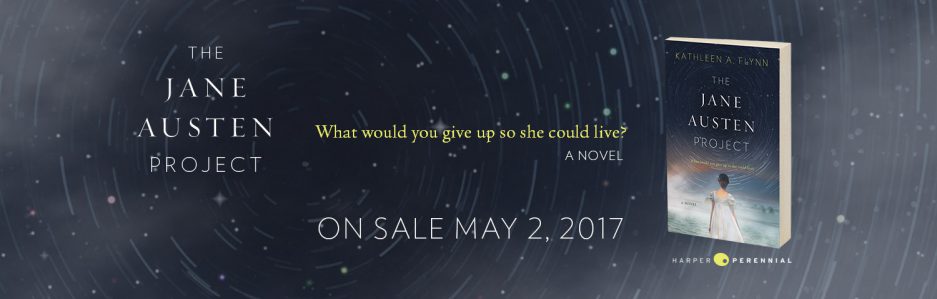
Progress report: I started writing The Jane Austen Project in the start of 2008. It is now, as I hardly need point out, more than halfway through 2010. I had hoped to complete a rough draft by the end of 2008. So much for that!

I have just finished Chapter 26 and am starting work on Chapter 27. In the “big file” where I combine the chapters (each chapter is composed as an individual Word file, as it seems less cumbersome that way) I have about 127,000 words or 371 double-spaced pages. My guess would be that 27,000 of those words are excess, but the number could well be higher. A harder question to answer is how badly flawed is it structurally (for that it is flawed is not in question). How much work will it take to get into the shape I want, assuming I get to the end? (I am pretty sure I will get to the end, which is something I have doubted from time to time.) And will I know “in the shape I want” when I see it?

If I had ever learnt, I should have been a great proficient.

Lady Catherine’s view of music was more or less my own view of novel-writing, perhaps less baldly expressed, until I actually came to try it. Now I know better. How do people actually manage to organize their thoughts, marshal their energies, keep their metaphors in good repair, and sustain this effort for several hundred pages? Having a computer certainly makes things technically easier — I read once that Sonya Tolstoy copied out War and  Peace for Leo seven times, for he not surprisingly kept making revisions — but the basic problem is the same.  How do you keep it all in your head as a unified work, unruly enough to be a living thing and yet controlled enough to be readable?

I wrote from childhood. It seemed as natural as reading, as breathing. But now, when I think about it, it does not. It seems absolutely terrifying. What do I mean by terrifying? I will try to explain. It’s like a long walk in a dark wood, Blair-Witchy, night sounds all around you, cobwebs in the dark, twigs snapping under foot, a sense of barely reined-in fear. Each step is manageable, but then there is another one after that, and another. You’re very alone, and it’s dark. To turn back is impossible, to keep going seems unimaginable, but you cannot stop either. Speared on the horns of this trilemma, you proceed. Step, breathe, proceed.

I kept thinking this dark-wood sensation would leave me in time, that after a while the process of writing, of finding out what it is I am going to come out with next, would start to seem less dark, less mysterious and unpredictable and scary, but 127,000 words later, it has not, and I begin to see that it must be part of the experience.

Or not. Maybe other people know what they are doing in a way that I do not?

That’s according to this analysis tool, which also found, according to her own Twitter feeds, that Margaret Atwood writes like Stephen King (or was it James Joyce?) so I receive this good news with a qualified enthusiasm.  Surely Margaret Atwood should write like, well, Margaret Atwood? Isn’t she famous enough to be in the database that analyzes prose? If she is not, who is?

Right now I am nearly done reading Camilla by Fanny Burney, and what a strange, hot mess that is.  Better than Evelina, in the sense of being more richly crowded with people and incident, a more fully realized work. It looks forward to the overstuffed  Victorian novels of Dickens and Eliot, in its sentimentality and its extremes. But it also shows the stamp of earlier 18th-century novels, especially Tom Jones, Clarissa and The Vicar of Wakefield, in its sweeping authorial asides and moral lessons. Still, the sense that strikes me most strongly reading this book is what a raw deal women got in this world, and how the author hardly seems to remark on this, as if it is something too obvious to require comment.

The plot of Camilla, if I dare to describe such a thing, centers on the title character, a girl of 17 when the main action of the plot begins. She is one of three daughters in what is presented as a nearly perfect family: a kind, intelligent clergyman father, a mother who is even more intelligent and respected (though who is for most of the action of the story on urgent business on the Continent, thus depriving Camilla of her counsel when it is most needed). Camilla is all unaffected goodness and generosity, though with an impulsiveness that leads her into trouble. Since childhood she has loved, and been adored by, the rich and handsome boy next door (next estate, actually)  an equally kind but more rigidly righteous person with the improbable name of Edgar Mandlebert (Burney has a weakness for crazy names.) Through a series of absurd misunderstandings that could have been cleared up in a single honest conversation, which they somehow seem never able to have, they become ever more estranged, as Camilla embarks on a round of pleasure outings in Tunbridge Wells, Southhampton and London that bring her decreasing pleasure, and an officious hanger-on with the unlikely name of Mrs. Mittin leads her unwittingly deep into debt.

The novel is fascinating  in how it puts money front and center. Camilla’s debt problems stem not from her own extravagance (she enjoys giving money to the poor much more than spending it on herself) than from the mischief of her brother, Lionel, the scapegrace black sheep, who without being actually evil, brings enormous misery to his family by a whole range of 18th-century bad-boy behavior: he gambles, hunts obsessively, has an affair with a married woman, refuses to settle on a career,  accumulates large debts and playfully extorts money from the uncle he expects to be the heir of,  expressing no remorse for any of this until it is too late. It is his borrowing all the money Camilla had been given for her outing to Tunbridge Wells that first sets her on the path to debt and disgrace, as seemingly small missteps lead to huge problems.

We learn along the way about how the mere rumor of future wealth assures shopkeepers will grant one credit on easy terms (Mrs. Mittin, informed by a friend, who was lied to by Lionel, spreads the false report that Camilla is to inherit the fortune of her uncle Sir Hugh, a baronet). When the rumor turns out to be untrue, the vultures start circling and we learn  about money-lenders (usury is illegal but popular) and debtors’ prison, where Camilla’s father briefly lands before he is bailed out by his friends.

In addition, much of the plot is driven by Sir Hugh’s decision to settle his fortune on the brilliant, classically educated, generous and hopelessly innocent Eugenia, Camilla’s youngest sister, who is lame and smallpox-scarred through a set of childhood mishaps that Sir Hugh blames on himself. Meanwhile, Lynnmere, a cousin of Camilla’s and even more worthless than Lionel, assumes he is the heir and racks up debt accordingly.  And poor saintly Eugenia is constantly at the risk of being kidnapped and forced into marriage for her money.

Men behave much worse, but women’s behavior is held to a much higher standard and thus they are often found guilty of impropriety for seemingly minor offenses. This is the lesson Camilla learns the hard way.

Women, in general, are presented as being at the mercy of capricious, money-hungry and sometimes violent men, subject to insult in public places when not properly chaperoned (a theme explored in much more detail in Evelina). Assumed to be coquettes until proven otherwise. Worse, they are allowed to express nothing. Even if they like a man, they are not supposed to reveal this preference openly; they have to wait demurely and hope the man they like picks them. If chosen by a man they do not like, their rejection runs the risk of being seen as maidenly reserve or just another species of coquettery. It is this set of assumptions Jane Austen plays off brilliantly in Pride and Prejudice in the proposal scene with Mr. Collins, when that clergyman refuses to take no for an answer:

“As I must therefore conclude that you are not serious in your rejection of me, I shall choose to attribute it to your wish of increasing my love by suspense, according to the usual practice of elegant females.”

This remark provokes Elizabeth to make a reply that is astonishing, not by her own standards, but by those of female behavior in novels of the era:

“I do assure you, sir, that I have no pretensions whatever to that kind of elegance which consists in tormenting a respectable man. I would rather be paid the compliment of being believed sincere. I thank you again and again for the honor you have done me in your proposals, but to accept them is absolutely impossible. My feelings in every respect forbid it. Can I speak plainer ? Do not consider me now as an elegant female, intending to plague you, but as a rational creature, speaking the truth from her heart.”

This series of frank, concise declarations adds up to a speech Camilla could never have made, nor Clarissa, nor Evelina, nor Sophie in Tom Jones. The idea that a  young woman could be “a rational creature speaking truth from her heart,” who could, without even the thought of consulting her parents, reject an offer of marriage so quickly and decisively, is deeply, yet quietly radical by the standards of the day.

We cheer it now, but we do not fully understand this; the idea that Elizabeth Bennet should have a mind of her own and use it does not amaze us. As her detractors have often observed, Jane Austen never created anything close to a proto-feminist hero; she shows suspicion of women who spend too much reading books or mastering an instrument, and no one ever makes a speech about the rights of women. But her radicalism is right under our noses, in its quiet insistence of women having feelings and thoughts that are as valid and important as those of men, and the words in which to clothe them.


Follow

Get every new post delivered to your Inbox.