Distance and Perspective

When I first started writing this novel, which seems extremely long ago now, the metaphors that struck me most forcefully were architectural. Constructing a plot seemed to me like building a house: I needed to dig a foundation, build a frame to hang my ideas on. Then there were awkward pipes and wires sticking out everywhere and unfinished stairs the unwary might fall down, holes in the plot big enough for rodents to enter through and take up residence inside.

The house is not complete yet, but when I think back to that time in comparison it seems very done. The big holes have been filled in; it’s been insulated with a soft filling of fine words. The tubes that carry in power and water and information have been concealed behind walls, and the walls themselves painted soothing, harmonious colors. Someone has even hung art on those walls!

And that, I find, is currently my operating metaphor. I’m adding a touch here and there, stepping back to gauge the overall effect, marveling at how the addition or subtraction of a single word or phrase can ripple through the entire composition. Line and color.

I think 2/3 of the book is how it needs to be. It’s the last third that is the killer, though, and always has been. Act III is where the plot either thickens or curdles and falls apart, to use a different metaphor. Where the things that people have been becoming and realizing must ripen into action and choice.

Hot Under the Fichu

The blogosphere has been all aflutter with the news that Clandestine Classics proposes to “spice up” the classics by adding erotic passages to works of literature including”Pride and Prejudice,” “Jane Eyre,” and oddly enough “20,000 Leagues Under the Sea.” (Actually, I’ve never read that; maybe there is a lot of suppressed erotic tension, though?)

How are we to understand this development? One thing to keep in mind is that Clandestine Classics gets no points for originality. One need only think of “Pride and Promiscuity: the Lost Sex Scenes of Jane Austen” or “Sense & Sensuality: Erotic Fantasies of Jane Austen,” to name but a few. The idea that sex is missing from Jane Austen (and Charlotte Bronte, etc) is apparently one people cannot get rid of, any more than they can stop themselves from rewriting “Pride and Prejudice” from Darcy’s point of view. But does it reveal any thing about the characters that we didn’t know already? I would tend to think not. If you cannot figure out just from reading “Persuasion” that Anne Elliot wants to have sex with Captain Wentworth, you are an idiot. Your library card should be revoked.

Another idea that occurred to me is there might be an untapped market for writing sex scenes into less likely 19th-century classics. “Middlemarch”? There’s a great well of repressed passion there. And the Rosamund-Lydgate marriage only makes sense if you understand it through the prism of sexual attraction. “Anna Karenina” would truly benefit from a little more in the way of heaving bosoms and warm loins. The reader is left to imagine that sex with Vronsky was amazing and this is why Anna K left her respectable life and son she loved very much to become a fallen woman — but Tolstoy never even gets to hint that. (He gets much closer to the bone in the deeply disturbing Kreuzter Sonata, which was promptly censored by the Russian authorities.)

“A Tale of Two Cities”? “Little Dorrit”??! The mind reels.

A Farewell to Something

The news that Scribner is bringing out a new edition of “A Farewell to Arms” with all the 40-something endings that Hemingway tried and rejected was of more than usual interest to me, for reasons that regular readers of this blog will have no trouble guessing.

So other people do that too? Particularly Hem, who has been established in the literary pantheon as the very extreme of a certain type of 20th-century writer: macho, terse, but above all decisive. Hem does not waffle, or so we would like to think. This might be an appropriate time to confess I have never read “A Farewell to Arms,” finding H. rather tedious as novelist, although I think some of his short stories are among the very finest examples of that genre (and I also liked “A Movable Feast”).

But I would would read this edition. Unlike some cynical commenters who saw in this publishing move merely a naked ploy to sell new editions of an old book, I think the process of writing is sometimes more interesting than the result. As I’ve been revising my novel I’ve been taking things out that I no longer think work but might change my mind about later, from single sentences to entire chapters. (I draw the line at single words. I am not that crazy. Yet.) To my astonishment, today I noticed this outtakes file is, itself, 115 pages long.

Somehow the book itself seems to always remain about 390 pages long, however, like one of those magical purses in fairy tales that constantly are full of gold.

The Sense of an Ending

I have been neglecting this blog, but I have definitely not been idle. Several geologic ages seem to have passed since I wrote my review of “Ivanhoe.” I have discovered several surprising new things about characters I thought I knew well. Among them, not to give away any plot spoilers, is that Liam can sing and that Rachel had had a long affair with a (supposedly happily) married man before joining the time travel project. Are these facts important? I think so. Continue reading

Further Reading: Ivanhoe

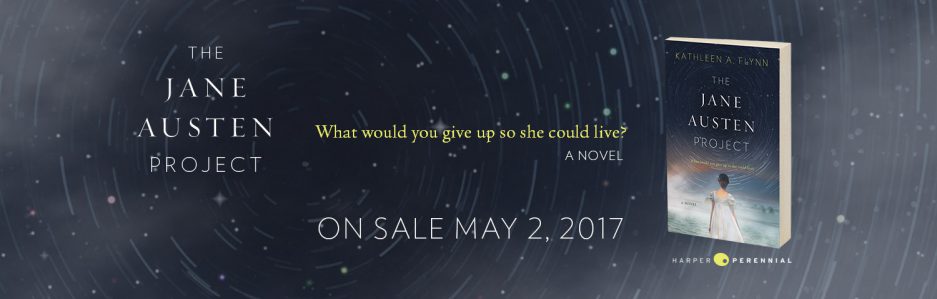
Near the beginning of my current draft of “The Jane Austen Project” there is an allusion to “Ivanhoe.” As a matter of principle I have tried to read the books my characters read, and while I long doubted there was much to be gained from reading “Ivanhoe,” I downloaded the free Kindle version onto my phone anyway, just to have something to read in case I accidentally found myself on the subway between library books. This happened, and I started reading it.

I am perhaps a third of the way through, and it’s astonishing. Continue reading

Festina Lente

Maybe I am revising too slowly. I keep reading over the same parts, now into Chapter 15, and it’s glacial. Or maybe there is some other problem. Last week I was so excited about how well my revising was going that I decided to risk exposing myself to other influences. I went to a well-rated Broadway play (Venus in Fur — amazing!) and read a best-selling novel (The Hunger Games — gripping!). There was a two-hour train ride where I simply sank into revising TJAP, ignoring the many distractions of crying babies, French tourists and self-important backpackers, that made me think this was not as hard as I always thought it was. Maybe I have finally figured out what I am doing!

But today I read what I had been doing, and I felt bored by it. In general, the parts that write themselves, that delight me at the time I am writing them, often seem shoddy and facile on closer inspection in the cold light of Later. And so it is now.