What We Talk About When We Talk About Writing

Progress report: I started writing The Jane Austen Project in the start of 2008. It is now, as I hardly need point out, more than halfway through 2010. I had hoped to complete a rough draft by the end of 2008. So much for that!

I have just finished Chapter 26 and am starting work on Chapter 27. In the “big file” where I combine the chapters (each chapter is composed as an individual Word file, as it seems less cumbersome that way) I have about 127,000 words or 371 double-spaced pages. My guess would be that 27,000 of those words are excess, but the number could well be higher. A harder question to answer is how badly flawed is it structurally (for that it is flawed is not in question). How much work will it take to get into the shape I want, assuming I get to the end? (I am pretty sure I will get to the end, which is something I have doubted from time to time.) And will I know “in the shape I want” when I see it?

If I had ever learnt, I should have been a great proficient.

Lady Catherine’s view of music was more or less my own view of novel-writing, perhaps less baldly expressed, until I actually came to try it. Now I know better. How do people actually manage to organize their thoughts, marshal their energies, keep their metaphors in good repair, and sustain this effort for several hundred pages? Having a computer certainly makes things technically easier — I read once that Sonya Tolstoy copied out War and  Peace for Leo seven times, for he not surprisingly kept making revisions — but the basic problem is the same.  How do you keep it all in your head as a unified work, unruly enough to be a living thing and yet controlled enough to be readable?

I wrote from childhood. It seemed as natural as reading, as breathing. But now, when I think about it, it does not. It seems absolutely terrifying. What do I mean by terrifying? I will try to explain. It’s like a long walk in a dark wood, Blair-Witchy, night sounds all around you, cobwebs in the dark, twigs snapping under foot, a sense of barely reined-in fear. Each step is manageable, but then there is another one after that, and another. You’re very alone, and it’s dark. To turn back is impossible, to keep going seems unimaginable, but you cannot stop either. Speared on the horns of this trilemma, you proceed. Step, breathe, proceed.

I kept thinking this dark-wood sensation would leave me in time, that after a while the process of writing, of finding out what it is I am going to come out with next, would start to seem less dark, less mysterious and unpredictable and scary, but 127,000 words later, it has not, and I begin to see that it must be part of the experience.

Or not. Maybe other people know what they are doing in a way that I do not?

Fanny Burney, Jane Austen and Rational Creatures Speaking Truth From the Heart


Right now I am nearly done reading Camilla by Fanny Burney, and what a crazy mess that is.  Better than Evelina, in the sense of being more richly crowded with people and incident, a more fully realized work. It looks forward to the overstuffed  Victorian novels of Dickens and Eliot, in its sentimentality and its extremes. But it also shows the stamp of earlier 18th-century ones, in its sweeping authorial asides and moral lessons. Still, the sense that strikes me most strongly reading this book is what a raw deal women got in this world, and how the author hardly seems to remark on this, as if it is something too obvious to require comment.

And this makes me think, again, of Jane Austen — as so many things do.

The plot of Camilla, if I dare to describe such a thing, centers on the title character, a girl of 17 when the main action of the plot begins. She is one of three daughters in what is presented as a nearly perfect family: a kind, intelligent clergyman father, a mother who is even more intelligent and respected (though who is for most of the action of the story on urgent business on the Continent, thus depriving Camilla of her counsel when it is most needed). Camilla is all unaffected goodness and generosity, though with an impulsiveness that leads her into trouble. Since childhood she has loved, and been adored by, the rich and handsome boy next door (next estate, actually)  an equally kind but more rigidly righteous person with the improbable name of Edgar Mandlebert (Burney has a weakness for crazy names.) Through a series of absurd misunderstandings that could have been cleared up in a single honest conversation, which they somehow seem never able to have, they become ever more estranged, as Camilla embarks on a round of pleasure outings in Tunbridge Wells, Southhampton and London that bring her decreasing pleasure, and an officious hanger-on with the unlikely name of Mrs. Mittin leads her unwittingly deep into debt.

The novel is fascinating  in how it puts money front and center. Camilla’s debt problems stem not from her own extravagance (she enjoys giving money to the poor much more than spending it on herself) than from the mischief of her brother, Lionel, the scapegrace black sheep, who without being actually evil, brings enormous misery to his family by a whole range of 18th-century bad-boy behavior: he gambles, hunts obsessively, has an affair with a married woman, refuses to settle on a career,  accumulates large debts and playfully extorts money from the uncle he expects to be the heir of,  expressing no remorse for any of this until it is too late. It is his borrowing all the money Camilla had been given for her outing to Tunbridge Wells that first sets her on the path to debt and disgrace, as seemingly small missteps lead to huge problems.

We learn along the way about how the mere rumor of future wealth assures shopkeepers will grant one credit on easy terms (Mrs. Mittin, informed by a friend, who was lied to by Lionel, spreads the false report that Camilla is to inherit the fortune of her uncle Sir Hugh, a baronet). When the rumor turns out to be untrue, the vultures start circling and we learn  about money-lenders (usury is illegal but popular) and debtors’ prison, where Camilla’s father briefly lands before he is bailed out by his friends.

In addition, much of the plot is driven by Sir Hugh’s decision to settle his fortune on the brilliant, classically educated, generous and hopelessly innocent Eugenia, Camilla’s youngest sister, who is lame and smallpox-scarred through a set of childhood mishaps that Sir Hugh blames on himself. Meanwhile, Lynnmere, a cousin of Camilla’s and even more worthless than Lionel, assumes he is the heir and racks up debt accordingly.  And poor saintly Eugenia is constantly at the risk of being kidnapped and forced into marriage for her money.

Men behave much worse, but women’s behavior is held to a much higher standard and thus they are often found guilty of impropriety for seemingly minor offenses. This is the lesson Camilla learns the hard way.

Women, in general, are presented as being at the mercy of capricious, money-hungry and sometimes violent men, subject to insult in public places when not properly chaperoned (a theme explored in much more detail in Evelina). Assumed to be coquettes until proven otherwise. Worse, they are allowed to express nothing. Even if they like a man, they are not supposed to reveal this preference openly; they have to wait demurely and hope the man they like picks them. If chosen by a man they do not like, their rejection runs the risk of being seen as maidenly reserve or just another species of coquettery. It is this set of assumptions Jane Austen plays off brilliantly in Pride and Prejudice in the proposal scene with Mr. Collins, when that clergyman refuses to take no for an answer:

“As I must therefore conclude that you are not serious in your rejection of me, I shall choose to attribute it to your wish of increasing my love by suspense, according to the usual practice of elegant females.”

This remark provokes Elizabeth to make a reply that is astonishing, not by her own standards, but by those of female behavior in novels of the era:

“I do assure you, sir, that I have no pretensions whatever to that kind of elegance which consists in tormenting a respectable man. I would rather be paid the compliment of being believed sincere. I thank you again and again for the honor you have done me in your proposals, but to accept them is absolutely impossible. My feelings in every respect forbid it. Can I speak plainer ? Do not consider me now as an elegant female, intending to plague you, but as a rational creature, speaking the truth from her heart.”

This series of frank, concise declarations adds up to a speech Camilla could never have made, nor Clarissa, nor Evelina, nor Sophie in Tom Jones. The idea that a  young woman could be “a rational creature speaking truth from her heart,” who could, without even the thought of consulting her parents, reject an offer of marriage so quickly and decisively, is deeply, yet quietly radical by the standards of the day.

We cheer it now, but we do not fully understand this; the idea that Elizabeth Bennet should have a mind of her own and use it does not amaze us. As her detractors have often observed, Jane Austen never created anything close to a proto-feminist hero; she shows suspicion of women who spend too much reading books or mastering an instrument, and no one ever makes a speech about the rights of women. But her radicalism is right under our noses, in its quiet insistence of women having feelings and thoughts that are as valid and important as those of men, and the words in which to clothe them.

Returning to Mansfield Park

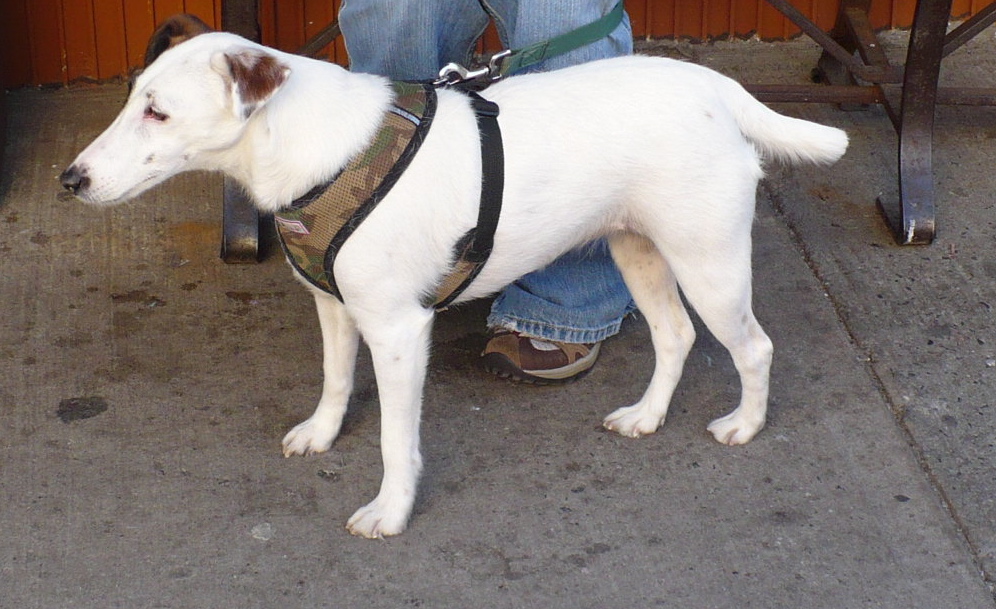
Olive the smooth fox terrier.  I  briefly considered changing her name to Fanny Price.

I reread Mansfield Park, again. It was fantastic, but in a completely different way than before. I remember the last time I read it (in December 2008)  I had been researching a lot about daily life in the era in order to try to realistically describe Liam and Rachel’s journey to 1815, and I was struck by how much more household detail there is in Mansfield Park, compared with many other of Jane Austen’s books. Mrs. Norris’s ideas about housekeeping, for example, and her interactions with servants, such as a reported conversation with the housekeeper at Sotherton:

That Mrs. Whitaker is a treasure! She was quite shocked, when I asked her whether wine was allowed at the second table, and she has turned away two housemaids for wearing white gowns.

It is the sort of remark that makes no real sense to the casual reader, 200 years later. But dropped at the end of the eventful chapter in which the party from Mansfield Park goes to visit the grand house of Maria Betram’s rich but idiotic fiance, it is not really confusing enough to make one stop, either: there is too much else going on, too much to enjoy.

What Jane Austen is doing here is giving expression to Mrs. Norris’s  avarice and nosiness through telling household details. She has been “spunging” as Maria puts it, wheedling a cream cheese and some pheasant’s eggs out of the housekeeper, meanwhile pressing her for details of how Sotherton is run, something no polite person would ever do. The “second table” refers to the dining arrangements for the less important servants, the rank and file: housemaids, scullery maids, porters, as opposed to the butler, housekeeper and cooks, for the servants’ world was made up of hierarchies as clearly defined  as that of their employers, with perks for the more important ones, like better food.

What may seem most strange to us now is that either group of servants would expect wine with dinner, but it was different world, with potable water a rare commodity, a world  where even children might drink small (weak) beer at breakfast.

And white gowns on housemaids? Wearing white was fashionable at this time, and a signifier of status in a world lacking Shout and automatic washing machines, because it was hard to keep clean for long, and hard to get clean once it was dirty. The message of  white gowns was that you had someone else doing your laundry, and lots of changes of clothes. But social striving being a constant across the centuries, it is reasonable to suppose that even housemaids would want to imitate their rich employers by wearing white, too — a species of putting on airs that Mrs. Whitaker was quick to detect and quash in the unfortunate housemaids, to the approbation of Mrs. Norris.

This time, I noticed different things:  the people. Julia and Maria, in their complacent narcissism, seem altogether modern. Described in slightly different words, you could easily imagine them starring in a reality show. The part in italics below seems to me a particularly insightful observation. Who has not known someone like that?

The Miss Bertams were now fully established among the belles of the neighborhood, and as they joined to beauty and brilliant acquirements, a manner naturally easy, and carefully formed to general civility and obligingness, they possessed its favor as well as its admiration. Their vanity was in such good order that they seemed quite free from it, and gave themselves no airs; while the praises attending such behavior, secured, and brought round by their aunt, served to strengthen them in believing they had no faults.

Henry and Mary Crawford  are also easily recognizable types found everywhere today: blase, amoral, mercenary, with a charm that conceals the void beneath. In the conversation between Mary, Fanny and Edmund in the chapel at Sotherton, Mary is saying exactly what most modern readers would probably feel about religion; her repeated determination to marry well (that is, to  find someone with money)  is also a common theme among a certain subset of contemporary women.

Fanny, by contrast, seems quite alien, and this is probably why she is hard for the 2010 reader to appreciate, along with the fact that her name has unfortunately become risible to modern ears. Her shyness, her humility, her physical weakness and her total lack of any sense of entitlement all seem like defects. The idea that she was might be a Christian heroine, a less flashy counterpart of Clarissa Harlowe or Beth March, is merely puzzling to the modern reader. Today she would be diagnosed with  low self-esteem and mild depression, a meek loser in a world where winners are people like her cousins Julia and Maria. She would probably be put on Prozac. And yet despite being afraid of practically everything, she is stubborn.  (An unlikely welding of traits, since we expect the nervous to be tractable, but also found in my dog, Olive,  above, to such a degree that I once thought of changing her name to Fanny Price.)

Fanny stands up for what is right,  resisting the theatricals with all her (limited) might, urging her cousin not to slip through the fence into the park (in one of the most symbolic moments in all Jane Austen’s writing):

“You will hurt yourself, Miss Betram,” she cried, “you will certainly hurt yourself against those spikes — you will tear your gown — you will be in danger of slipping into the Ha-Ha. You had better not go.”

She was right, of course, in the end, but no one listened.  Fanny takes her stand for the unfashionable virtues: order, restraint and tradition; for meekness, humility and right-thinking. She is the person everyone ignores, the poor relation whose wishes count for nothing, even to herself. She is Jane Eyre, minus the grit. I like her more every time I read this book. But I do have to wonder what Jane Austen was thinking about when she created her. Did Fanny seem a bit annoying and goody-two-shoes even in 1814? Was Jane Austen’s own experience of being a poor relation, for example when staying at her brother Edward’s great house at Godmersham, filtered through fiction to be reflected in little Fanny?

Dull Elves

Inspired by this essay in Persuasions, which discusses By a Lady in the context of Austen biography, I went back and started rereading another book it mentions, The Jane Austen Book Club by Karen Joy Fowler. I read this when it first came out, several years ago, and I remember liking it not at all. For I had expected it to be more about Jane Austen, and less about the members of the book club, who seemed to me spoiled and Californian, with problems I could not relate to.

What a difference a few years and a few more books make! I started reading it again in the subway on the way to work and was astonished by how witty it is, how subtly it connects the plots and themes of Jane Austen’s novels with incidents from the lives of the book club members. I felt both ashamed (because I was too ignorant to get it the first time around, and blamed the book rather than myself)  and happy (it’s agreeable to realize that one can grow smarter even as one grows older, and that I had).  It also made me wonder how many other books that I have read and not liked and was just too stupid to understand. Certainly several Jane Austen books were like that. And I probably have not given David Copperfield its due.

Emma. I think it’s fair to say the first two or maybe three times I read Emma I did not get it at all, however one defines that term. Mortifying admission indeed! But true. I failed to get Mansfield Park the first time through (I remember reading it on a train from Amsterdam to Berlin when I was  16, with complete, unadulterated incomprehension). The next time, a long time later, I think I understood it well enough, from the perspective of the plot, but I did not like it. I resisted its implications, which are still disturbing.

Before requesting The Jane Austen Book Club I had gotten The Female Quixote from the library, so I am kind of reading these together, to curious effect. FQ was written in 1752 by Charlotte Lennox, who was friendly with both Samuel Richardson and Samuel Johnson. We know Jane Austen read this book, for she mentions in a 1807 letter that she is rereading, and finding it funnier than ever.

The Female Quixote is graced with a perfect title, which I admit put me off the book, because the idea seemed so odd, but now that I am reading, am enchanted with. What would Don Quixote be like if he were a woman living in England in the mid-18th century, and instead of tales of chivalry had messed up his brain with romances? He would be like Arabella! This edition features charming mid-sentence capitalization which, along with the elaborate sentence structure, makes 18th-century literature so much fun to read, to wit:

Arabella indeed had been in such a terrible Consternation, that it was some Time before she even reconciled Appearances to herself; but, as she had a most happy Facility in accommodating every Incident to her own Wishes and Conceptions, she examined this Matter in so many different Ways, drew so many Conclusions, and fansied so many Mysteries in the most indifferent Actions of the supposed noble Unknown, that she remained, at last, more than ever confirmed in the Opinion, that he was some great Personage, whom her Beauty had forced to assume an Appearance unworthy of himself: When Lucy, no longer able to keep Silence, drew off her Attention from these pleasing images, by speaking of the Carp-stealing Affair again.

I’ve finished By a Lady, and now feel free to pass judgment on it. I continue to feel the weakest thing about it was tone. I need to write a whole post on tone, and the perplexities it presents, but at this moment the analogy that presents itself is about horses (why?). A horse can tell, I am certain, if it is being ridden by someone who has never sat on a horse before, versus an experienced, confident rider.  When you start reading a book, it is much the same, although it might take the reader longer than the horse to be certain. By a Lady seemed unable to decide just what it wanted to be. Was it a farce? A romance? A steamy erotic novel? Was it aiming high or low? It was wacky, but it lacked the courage of its convictions to go for broke and be quite wacky enough. In the end (and I am not giving anything away here) the reader realizes the author’s real debt is to Shakespeare, not Austen, as amazing coincidences and lost-and-found orphans lead to the longed-for happy ending. Lost-and-found orphans in Shakespeare (or in Fielding or Burney) can be accepted  in a way they would not be in say, Austen. It’s all about context, too, I guess.

Reading Material

I am extremely excited about this.  Thanks, AustenBlog, for the reminder! I wish I had time to read the whole issue right now, instead I shall link to it so I can easily find it again.

Persuasions, from what I have see of it before, is a fascinating examination of some of the most arcane Jane Austen topics imaginable (a great article about handwriting and writing materials proved immensely useful). It is intelligent without being academic and pretentious, a rare combination. At least in America.

Right now, in a little metafictional excursion,  I am reading By a Lady, by Amanda Elyot, a novel about time travel and Jane Austen.(!) This was quite harshly criticized by many Amazon readers, too harshly, I think.  I never pass final judgment on any book before finishing it, but I am finding it amusing, though more  Fanny Burney than Jane Austen. Picaresque and wacky, it is more fun to read than a lot of the Austen fan fiction out there.  Miss Elyot has done her research, though her exposition of it is sometimes clunky, not seamlessly integrated as you see, for instance, in the work of Tracy Chevalier.

The biggest problem I see is an unevenness of tone. That is so important, so hard to describe and so easy to get wrong.

Update and spoiler alert: There are two chapters in rapid succession devoted to steamy sex scenes! Not that there’s anything wrong with that, but I  have noticed that some readers hate sex scenes when they weren’t expecting them (and if they were expecting them, presumably would not read the book). One reviewer praised “Jane Austen Ruined My Life” precisely because it did not contain sex scenes, which to my mind seems a bit odd. I have nothing against them, per se, but it does seem to push willing suspension of disbelief to the breaking point to suppose that the heroine of the book would have unprotected (as well as mind-blowingly excellent) sex with the earl she had only recently met and become engaged (if somewhat informally) to. It just seems to pose too many practical problems, from birth control to chaperonage to spying servants. Also, she just happens to walk through a door in Bath and find herself in an elaborate sex club out of “Eyes Wide Shut”? Dens of vice were far from unknown in England of the time, but I would expect the door to be better policed.

This makes me realize: a narrative can contain many unrealistic elements but must somehow follow the rules it sets for itself. What those rules actually are becomes obvious only after the fact, when they are broken.  To take an example of a famous and unrealistic story — Alice in Wonderland. Alice falls down a rabbit hole and has a series of strange adventures involving talking animals, changes in her own body size, a baby that changes into a pig, a croquet game involving live animals, etc. What is the constant in all of this is Alice’s own response to: baffled, yet unfailingly polite by her own standards of politeness. She is the glue that holds all this together, along with Lewis Carroll’s deadpan tone.

Along with the sex, Miss Elyot brings Jane Austen onstage. She solves the problem of what Jane Austen was like by putting into her mouth words that she actually wrote: choice epigrams lifted straight from the novels and letters. This is kind of funny; it turns Jane Austen into a sort of Regency-era Oscar Wilde, or a  Groucho Marx, perhaps a better analogy, because part of the charm of  Groucho is that no one ever seems to react as if he were saying anything odd. Similarly, Jane Austen makes one snarky remark after another, sotto voce, to the heroine she has just met, and her wit goes unremarked and unappreciated  (except by her cousin  the earl (!) the one who also happens to be having mind-blowingly excellent sex with the heroine). How handy!

I guess that is the other major weakness with this book, which for all I am criticizing I also am kind of enjoying, if only out of a sense of fellowship. It takes the parts of 1801 that it wants and ignores the parts that don’t suit it. And I see, perhaps more than most readers, just how hard that is not to do.

The Trouble With Normal

the-bennet-girls

I was near a TV, and the 2005 version of Pride & Prejudice was on, which meant that  I watched it. Amazing! And not in such a good way. I saw it in a theater when it came out five years ago, but was distracted by the problem of how very beautiful Keira Knightly is, and how having a drop-dead gorgeous Elizabeth  Bennet utterly transforms the plot dynamic,  since much of the charm of P&P resides in the fact that Mr. Darcy falls in love with her mind. Also, the movie itself is beautiful. The costumes, the houses, the landscapes all feel beautifully composed and yet slightly  imperfect, like real life, except more so. I think on a large screen all this beauty kept me from noticing the stunning omission that was immediately apparent 4.5  years later on a tiny television: It is not at all funny.

Pride & Prejudice. Not funny. How is that even possible?

It’s not surprising to find a film version of P&P devoid of irony,  since, like most literary devices, irony  transfers poorly to film.  And while the irony that suffuses P&P is perhaps the book’s most distinguishing feature, you don’t have to appreciate literary irony to recognize that P&P is also very funny. It’s witty, full of sparkling dialogue and hilarious exchanges that both move the action of the story forward and illuminate deeper themes of plot and character, as here in Chapter 10. As many before me have observed, P&P relies heavily on dialogue and is almost playlike in many places.  What could be simpler than transforming it into a screenplay, as the makers of the 1995 version learned to their lasting delight? You stand back and let Jane Austen do the heavy lifting, sometimes adding a scene of someone bathing or fencing or jumping into a lake just to take a break from all the talking and dancing and gowns.

This version did not. In the quest to keep the plot moving forward at a rapid clip, something had to go. Actually a lot of stuff did: Mr. Bingley was reduced to one sister, for instance, which had the effect of making the surviving one seem much friendlier with Mr. Darcy than she really had any right to be. Some of the funniest scenes in the book were brutally abbreviated, but even those that got their due (like Lady Catherine de Bourgh’s interrogation of Elizabeth at their first meeting) were, strangely, not funny.  Once Darcy and Elizabeth’s most famous exchanges have lost their subtle restraint and their sophisticated syntax, the characters also seem to lose all respect for each other, and express their unacknowledged passion by bickering like fishwives.  The only attempts at humor seemed of the stupidest slapstick variety,  more Three’s Company than Marx Brothers, as in two separate instances near the end of the film when various members of the Bennet family listen at doors — to overhear Mr. Bingley’s proposal to Jane, and Lady Catherine de Bourgh’s interview with Elizabeth. Besides not being that funny, it seems a deliberate lowering of standards, for in Jane Austen’s world the only person crass enough to eavesdrop deliberately is the dreadful Anne Steele.

Maybe a lowering of standards is the wrong way to put it. This is a Pride and Prejudice that seeks to shake the dust off a classic, as one reviewer put it. It attempts to make a nearly 200-year-old work seem up to date, and the way it does this is by making the people seem more like normal people today, who tend in the main to flatly state what they are feeling, lack a sense of irony, shout when they get angry, listen at doors.

But the whole charm of Jane Austen 200 years on is that these people she writes of are not like us: they are recognizably human, in their emotions and their failings, yet they are also very different, in their acceptance of social restraints that would seem highly limiting to us, were we forced to abide by them. The tension between one’s true feelings and these social constrictions is the real problem in Jane Austen’s work, and the movie adapters who seek to update her work by having characters toss off the restraints so that only the feelings remain (as when poor Anne Elliot is made to run through the streets of Bath, hatless and panting, in the 2007 adaptation) do so at their peril, at the cost of a fundamental integrity.