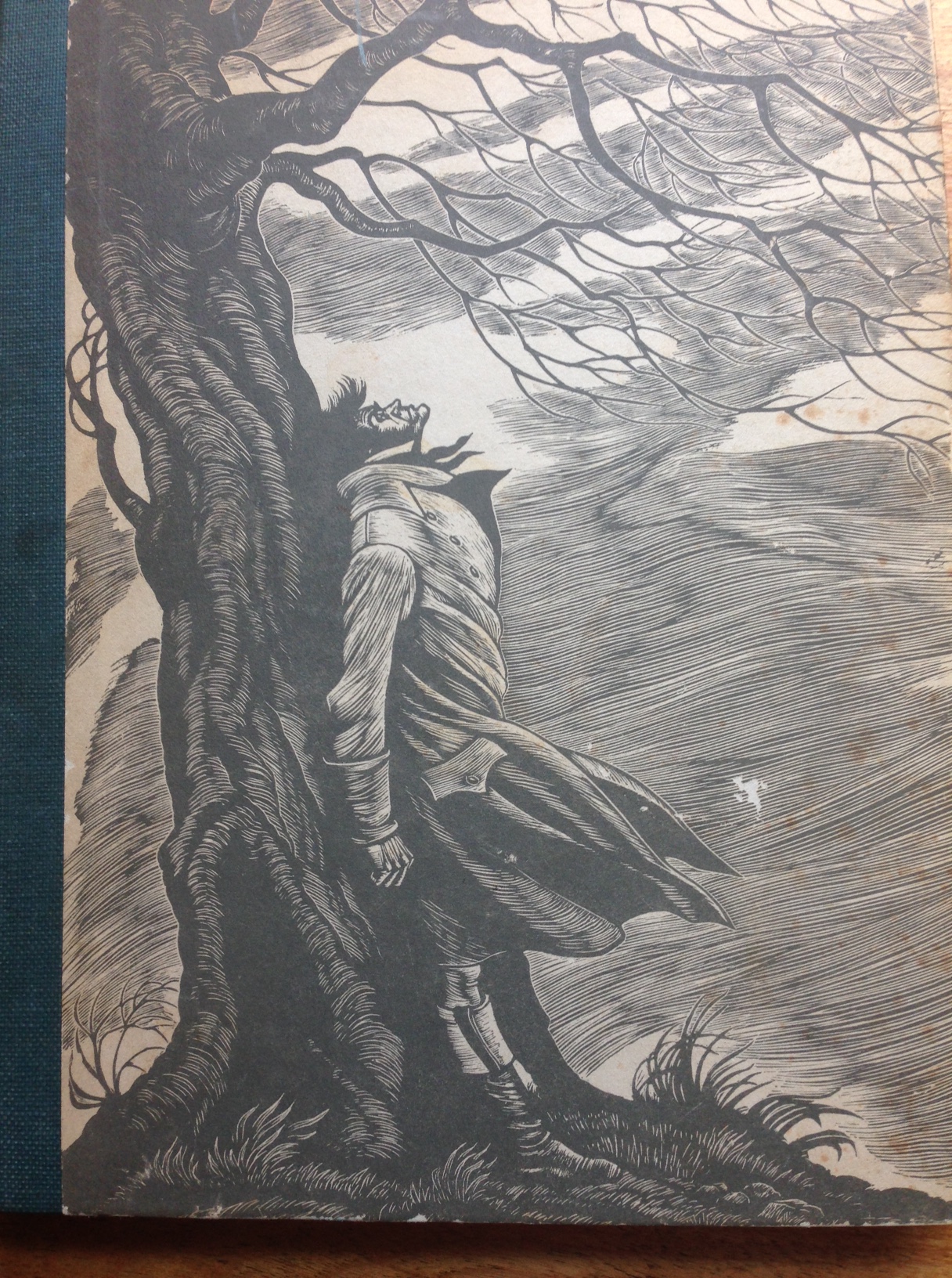
A book read twice already, with distinct displeasure, might not seem to deserve a third attempt. But Juliet Barker’s “Wild Genius on the Moors” and Jude Morgan’s “Charlotte and Emily” stirred my interest in Emily Bronte, not merely as a person, but also as an artist. Better prepared, I am reading her book very differently, with a new appreciation for what is, no question, one of the most singular achievements in 19th-century literature. Continue reading
About Reading

New Beginnings, Old Problems
I’ve been away from this blog for so long I feel almost obliged to fashion some adroit explanation — picnic, lightning — but the truth is, I was doing other things. Reading, writing, rethinking, rewriting. (When does rewriting have an end? I can only say, not yet.)
After “The Golem and the Jinni” I proceeded to read a string of amazing books I wish I had stopped to write about, for now I cannot do justice to them: Continue reading
Share this:

Why I Loved The Golem and the Jinni’
 Four days after I finished, finally waking up from the dream that was “The Golem and the Jinni,” which I found as amazing as anything I’ve read in a long time, with its own fevered internal logic. Where else would a mythological Northern European Jewish creature meet a mythological Middle Eastern Arab creature, but in 1900 New York, where immigrants of every kind brush shoulders and start new lives? She’s female, sexually demure, made of clay and able to read minds. He’s male, sexually wild, made of fire and able to sculpt metal with his bare hands. Naturally, they fall in love, since they are apparently the only two nonhumans trying to pass as humans in all of New York, a bond that transcends their many differences. Continue reading
Share this:

What We Talk About When We Talk About Bad Writing
I have always been a literary snob. As a child, the annoyingly earnest, bespectacled one constantly reading books ahead of grade level. As an adult, seldom reading what was popular or current, instead taking refuge from our unhappy age in the classics. When I was younger, I liked the giants of modernism like Woolf and Joyce; later on, I came to prefer the 18th- and 19th-century giants, but the idea was the same.
When I finally began to take seriously my long-neglected ambition to write a novel, my models were naturally what I had been reading. But being able to appreciate the genius of “Middlemarch” or “Anna Karenina” is a long way from being to write its modern answer, as beginning novelists quickly realize.
And so, early or late, you start to look over your shoulder. Continue reading
Share this:
Georgette Heyer and the Problem of Excellence
I’m just at the start of my acquaintance with Georgette Heyer, but I feel it is the beginning of a beautiful friendship. No one who spends as much time as I have in the Jane Austen space can avoid hearing about her, but until now I’ve been kind of warily “meh.” No longer. This is a writer and a woman to be reckoned with.
Metrics: One thing to know about Georgette Heyer is, 1902-1974. Continue reading
Share this:
The Other Bronte Girl
Inspired by Juliet Barker’s amazing Wild Genius on the Moors, I’ve been reading Anne Bronte for the first time.
Among the drawbacks of dying young is that other people get to tell your story, and so it is with Anne. Continue reading
 The Jane Austen Project: A Novel