New Beginnings, Old Problems

I’ve been away from this blog for so long I feel almost obliged to fashion some adroit explanation — picnic, lightning — but the truth is, I was doing other things. Reading, writing, rethinking, rewriting. (When does rewriting have an end? I can only say, not yet.)

After “The Golem and the Jinni” I proceeded to read a string of amazing books I wish I had stopped to write about, for now I cannot do justice to them: Continue reading

What We Talk About When We Talk About Bad Writing

I have always been a literary snob. As a child, the annoyingly earnest, bespectacled one constantly reading books ahead of grade level. As an adult, seldom reading what was popular or current, instead taking refuge from our unhappy age in the classics. When I was younger, I liked the giants of modernism like Woolf and Joyce; later on, I came to prefer the 18th- and 19th-century giants, but the idea was the same.

When I finally began to take seriously my long-neglected ambition to write a novel, my models were naturally what I had been reading. But being able to appreciate the genius of “Middlemarch” or “Anna Karenina” is a long way from being to write its modern answer, as beginning novelists quickly realize.

And so, early or late, you start to look over your shoulder. Continue reading

Georgette Heyer and the Problem of Excellence

I’m just at the start of my acquaintance with Georgette Heyer, but I feel it is the beginning of a beautiful friendship. No one who spends as much time as I have in the Jane Austen space can avoid hearing about her, but until now I’ve been kind of warily “meh.” No longer. This is a writer and a woman to be reckoned with.

Metrics: One thing to know about Georgette Heyer is, 1902-1974. Continue reading

Reading and Writing

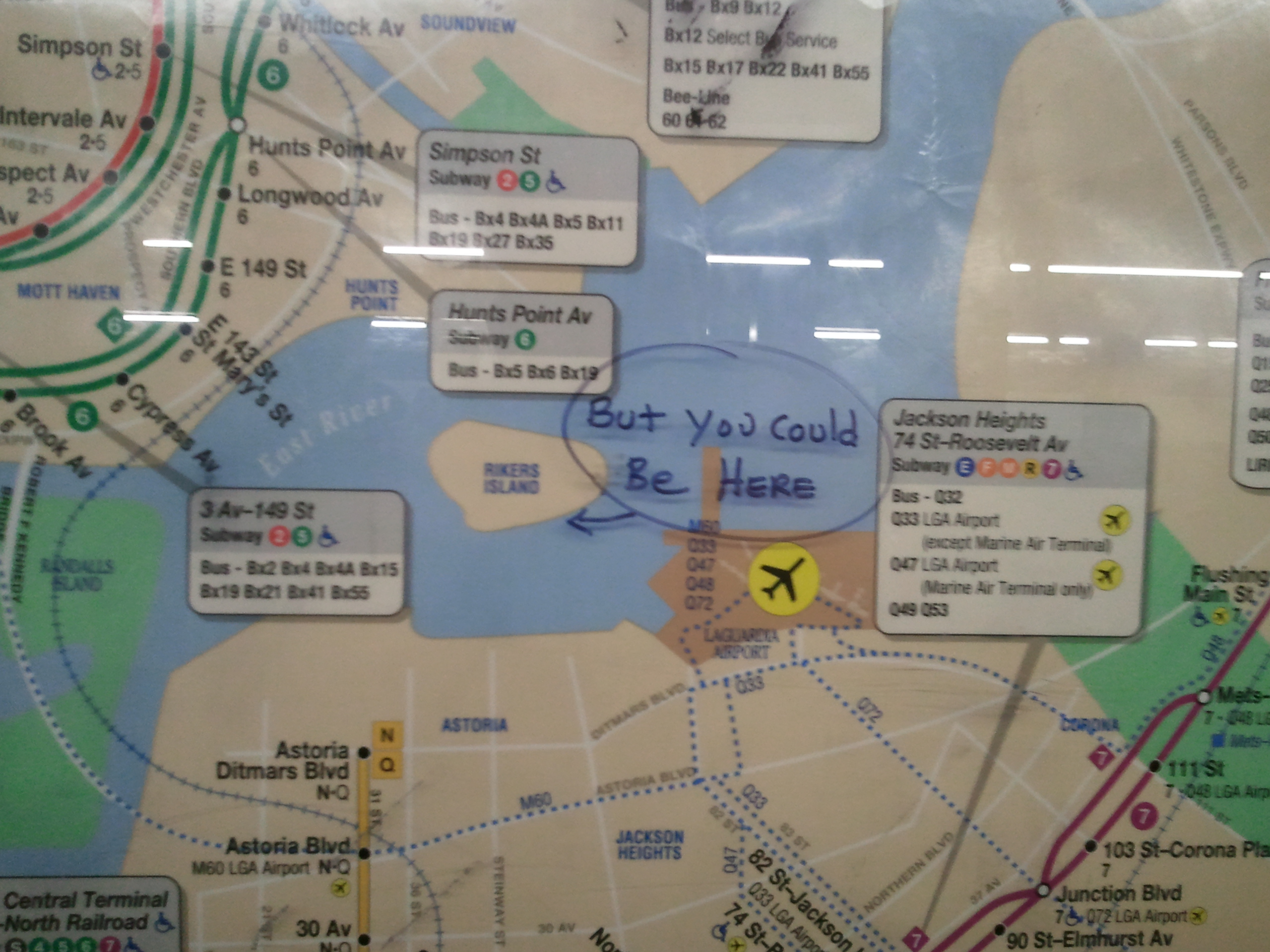
That New York is a city of writers goes without saying. But sometimes the words are unexpected: brief and witty as a haiku. From an outing in Lower Manhattan yesterday:

On a wall on Jersey Street, which is merely two blocks running from Crosby to Mulberry just south of Houston.
On a wall on Jersey Street, a nearly imperceptible street of merely two blocks running from Crosby to Mulberry just south of Houston.

Duly noted on the platform subway map at the F train at Second Avenue.
Duly noted on the platform subway map at the Second Avenue F stop.

What Jane Austen would have made of either of these, no one alive can say. But I am sure she would have enjoyed observing the Sunday-morning bagel-sandwich-buying scrum at Russ & Daughters, in its own way better than the Assembly Rooms at Bath.

In the Realm of Implausibility

Why write fiction? Why read it?

People enjoy stories because they are both like and not like real life. Fiction holds up a mirror to real life, but it’s a magic mirror: ideally it is shapely in a way that life generally isn’t, with a clear arc: of rising action, a sense of change, of forward motion. It leaves out the boring and irrelevant bits.

The successful distillation of life situations to their essence requires — what? Increasingly I think the whole goal of fiction is to make the implausible seem, by a series of subtle, almost imperceptible steps, vividly possible.

I’ve been thinking about this in the context of what did and did not work in Pam Mingle’s “Kissing Shakespeare” and Shannon Hale’s “Austenland” and two novels that would seem to have little in common, other than that I’ve recently read them, and that they involve the effort to assume the manners and customs of another time. Continue reading