Harper Lee and the Fellowship of Novelists

51sS6xJKbkL._SX329_BO1,204,203,200_
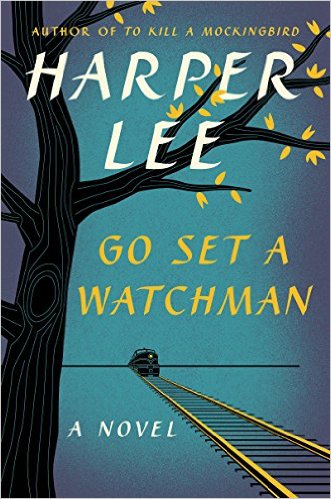
I’ve been more intrigued than I ever imagined being about the fuss surrounding the release of “Go Set a Watchman.” I had expected it to be merely a failed “Mockingbird,” cynically dusted off and sold; the reality turns out to be vastly more interesting.

Old-media to care about such things, but Michiko Kakutani’s review made 1A of the New York Times! Above the fold! And what does it take to get a book review to 1A, aside from being a long-lost (or at least, long-ignored) work by the reclusive author of one of America’s best-loved novels of the 20th century? Continue reading

Forget ’50 Shades of Grey.’ Go Read ‘Clarissa.’

clarissa

With the much-heralded release of the film version of the much-heralded book, it’s hard to avoid thinking about Fifty Shades of Grey, the work that has given fresh hope to a million unknown optimists writing self-published fanfiction, that made pornography respectable and brought bondage into the mainstream, and has become a touchstone for terrible prose. But this weekend I found myself instead thinking of something else; I found myself thinking of Clarissa. A book I read almost seven years ago and am unable to get past.

You want a story of dominance and submission? You want a rich, creepy, brilliant, controlling male lead? Robert Lovelace leaves Christian Grey eating his dust. And Clarissa Harlowe, handsome, clever and rich, but born in the wrong century and created by the wrong author, makes Anastasia Steele look more loser-ly and pathetic than she already is. There is drama, heartbreak, betrayal, drug use, Stockholm syndrome, cliffhangers and gender battles. As God is my witness, there’s everything.

This book is amazing. Why is it not better known? Continue reading

Harper Lee and Happenstance

mockingbirdI can’t be the only person to find this business with Harper Lee a little fishy. Just like that, a manuscript turns up? After 50-odd years? As Atticus Finch might ask, cui bono? Certainly not Harper Lee herself, who has shown no hunger for fame or money thus far.

And, really, can one actually misplace a manuscript? I think Hemingway once lost a suitcase containing one — but he was on the move a lot. I’d be thrilled to hear of a lost manuscript by Bruno Schulz found stuffed between floorboards in Drohobycz — but he was shot dead on the street by the Gestapo, a tragic example of someone who left his literary affairs in disarray. Sure it is possible to lose track of a manuscript, but perhaps harder when you live as quiet a life as Harper Lee has.

When we look closer, the story grows more complicated. It wasn’t so much “lost” as set aside and (perhaps) forgotten. The tale of an older Scout and an older Atticus set in the 1950s, it seems to have been an ur-Mockingbird, a thing Harper Lee’s editor told her wasn’t quite working. “Why don’t you write about her as a girl instead? That’d probably be more interesting.” Which turned out to be true. If there had been more to the novel, something Harper Lee wanted to return to and improve, it’s hard to understand why she did not do so sometime between then and now. Hard to avoid thinking she took the best parts for use in “Mockingbird.”

The book is sure to sell, yet I suspect most people who loved “Mockingbird” will be disappointed. To me, its greatest interest will be literary-forensic: How does her writing look unedited? What were the elements of “Mockingbird” that were there from the start, and what came later? What was the story she thought she was trying to tell, until persuaded the real story lay elsewhere?

Literature is full of such false starts, but we rarely get to read them. The speculation among Jane Austen scholars, for instance, is that “Sense and Sensibility,” “Pride and Prejudice,” or maybe both, were originally told in letters. Jane Austen’s own mention in a letter that she was chopping “Pride and Prejudice” to prepare it for publication, some 15 years after she first wrote an earlier version. How the mind reels at this! What did she take out?
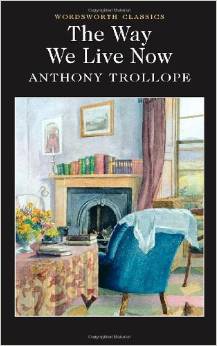
Why I Love ‘The Way We Live Now’

Unknown

A mortifying admission, but I had never read anything by Anthony Trollope until last week.  My youthful hatred of Dickens cast a shadow over the entire Victorian era. Nor did it help that Trollope had written so many books, none universally acknowledged as drastically better than the others, so one could feel confident starting with that. It’s the Joyce Carol Oates problem, made worse (it must be acknowledged) by his being a 19th-century male. I expected — what? Sermons, sentimentality, one-dimensional female characters. What can I say? I was a fool. Continue reading

I No Longer Write Like Jane Austen!

According to this literary analysis tool, which I came across by accident 3.5 years after originally writing about it, I now write like Arthur Clarke.

I don’t know. Is this a good thing, or a bad thing?

It goes without saying that having software analyze your prose is probably a bad idea. Particularly when we consider the Hemingway app. Or when we consider, as my earlier post noted, Margaret Atwood was found to write like Stephen King. But something has changed in the intervening 3.5 years; I would like to think for the better; for it is a bias of human nature (or at least my nature) to think we are always making progress toward something, as opposed to falling away from an original state of grace.

Fanny Burney’s ‘Cecilia’: Blame It on Pride (and Prejudice)

index
I’ve just finished this, Fanny Burney’s second novel, published 1782. It hurt like a toothache the whole time I was reading, yet I feel strangely bereft now that I am done.

People who complain that “Pride & Prejudice” lacks passion, a large group that includes not only Charlotte Bronte but also, apparently, the authors of “Pride & Promiscuity,” “Pride and Prejudice: The Wanton Edition” and “Mr. Darcy Takes a Wife,” should try reading “Cecilia.” Compared to it, “Pride & Prejudice,” with Darcy’s “fine, tall person, handsome features and noble mien” as well as Elizabeth’s “light and pleasing” figure and “fine eyes,” is like “Lady Chatterly’s Lover.”

But, really, anyone who likes “Pride & Prejudice,” a far larger group, should consider reading this work.  There are weird echoes of “Cecilia” all over “P&P,” not least the very title, an allusion to a comment late in “Cecilia” that everything that went wrong between the lovers could be attributed to the twin woes of PRIDE and PREJUDICE. (As is well known, P&P’s original title, “First Impressions,” had already been used by the time Jane Austen got around to finding a publisher in 1813.) “P&P,” like “Cecilia,” owes a debt to Samuel Johnson in its magnificent sentence structures, and explores how misunderstandings and status differences can thwart mutual attraction.

Unusually for a woman of the 18th century, Cecilia is wealthy in her own right, with (as we learn early on) £10,000 free and clear  from her parents and an estate from an uncle that assures her an additional yearly income of £3,000. She is also beautiful, kind and intelligent. And  an orphan! Continue reading