Inspired by Juliet Barker’s amazing Wild Genius on the Moors, I’ve been reading Anne Bronte for the first time.
Among the drawbacks of dying young is that other people get to tell your story, and so it is with Anne. Continue reading
Inspired by Juliet Barker’s amazing Wild Genius on the Moors, I’ve been reading Anne Bronte for the first time.
Among the drawbacks of dying young is that other people get to tell your story, and so it is with Anne. Continue reading
That New York is a city of writers goes without saying. But sometimes the words are unexpected: brief and witty as a haiku. From an outing in Lower Manhattan yesterday:

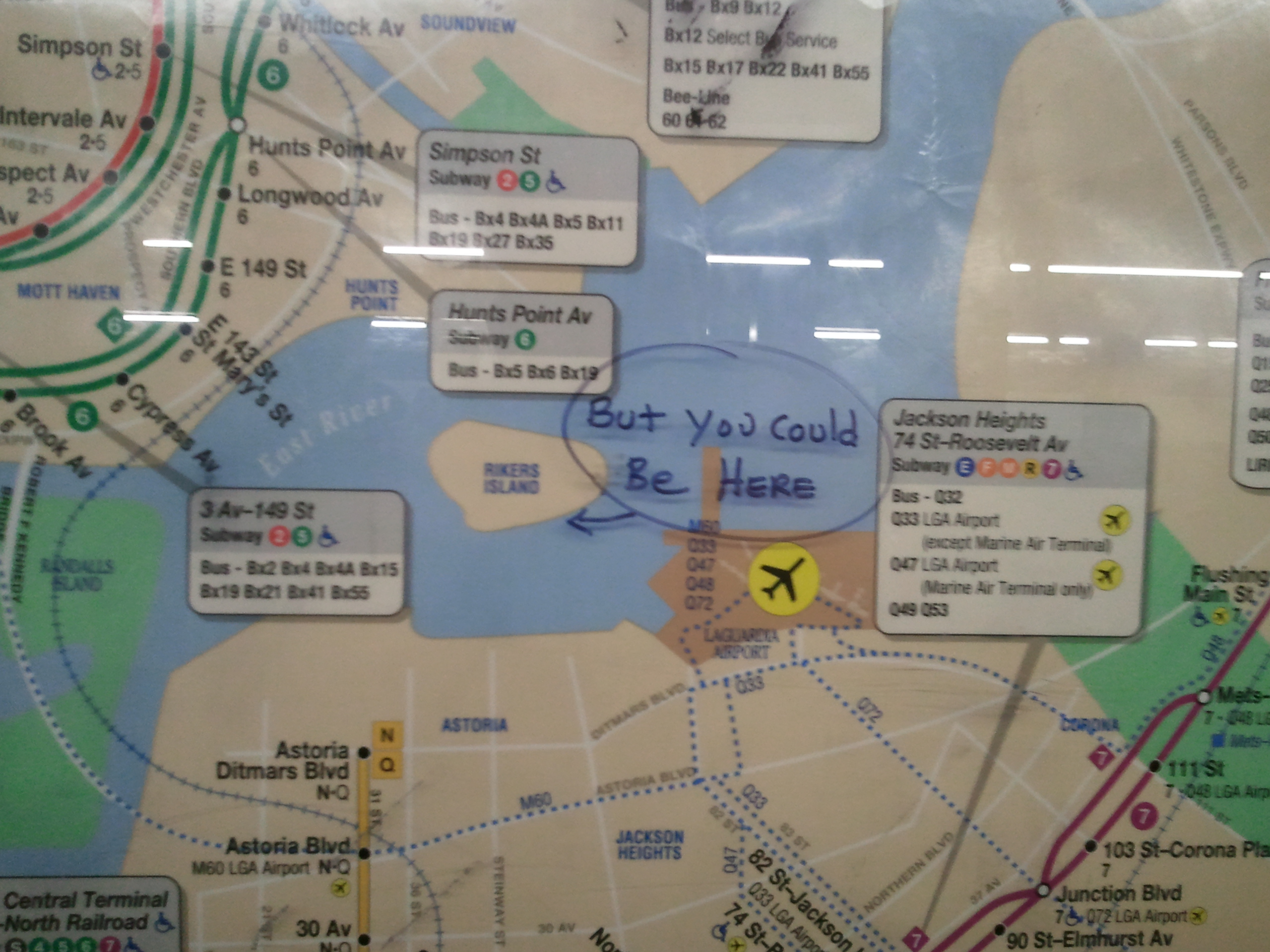
What Jane Austen would have made of either of these, no one alive can say. But I am sure she would have enjoyed observing the Sunday-morning bagel-sandwich-buying scrum at Russ & Daughters, in its own way better than the Assembly Rooms at Bath.
Why write fiction? Why read it?
People enjoy stories because they are both like and not like real life. Fiction holds up a mirror to real life, but it’s a magic mirror: ideally it is shapely in a way that life generally isn’t, with a clear arc: of rising action, a sense of change, of forward motion. It leaves out the boring and irrelevant bits.
The successful distillation of life situations to their essence requires — what? Increasingly I think the whole goal of fiction is to make the implausible seem, by a series of subtle, almost imperceptible steps, vividly possible.
I’ve been thinking about this in the context of what did and did not work in Pam Mingle’s “Kissing Shakespeare” and Shannon Hale’s “Austenland” and two novels that would seem to have little in common, other than that I’ve recently read them, and that they involve the effort to assume the manners and customs of another time. Continue reading
I’ve been reading, actually listening to, “In the Woods,” the first in Tana French’s murder mystery series about a Dublin murder squad. I read the fourth in the series, “Broken Harbor,” first, because it got a lot of good notice. Both are narrated by a male detectives (not the same one) with, shall we say, issues, and aside from the usual guilty pleasures of a well-written and psychologically penetrating murder mystery, Ms. French in both books offers interesting perplexities about the nature of the first-person narrator who is unreliable, or at least has something to hide. Continue reading
“The Incorrigible Children of Ashton Place (Book I: The Mysterious Howling)”, by Maryose Wood, and “Post Captain,” by Patrick O’Brian, the second volume in the Aubrey/Maturin novels, have little in common, except for being part of multi-volume series. One is about an intrepid young Victorian-era governess and her feral charges; the other about an intrepid youngish Napoleonic War-era British sea captain and his physician friend. One is aimed at children; the other at grown-ups. But by chance I came to be reading (or rereading, in the case of “Post Captain”) them in the same week, and it set me thinking about the problem of the narrator and the choices all novelists must make before they even start telling a story, and other choices, again and again and again, they face as they proceed. Continue reading
I generally start a novel with apprehension. Will it reward the time and effort I am expending on it? Will the things to like about it outweigh the imperfections? Will the ending disappoint?
And there is nearly always a moment, if the magic works, when the novel achieves escape velocity and I know I am going to like it more than I fault it (even if the ending disappoints, a separate problem). I don’t always notice when that moment comes, but in the case of “Tides of War” I did. It was on Page 117, when Goya appears as a character, painting Wellington’s portrait and thinking his own thoughts. Continue reading


 The Jane Austen Project: A Novel