Sharing this wonderful post from Henry Oliver.
https://www.commonreader.co.uk/p/why-we-love-jane-austen-more-than
“Why is Jane Austen quite so popular?
The reason is simple….”
Sharing this wonderful post from Henry Oliver.
https://www.commonreader.co.uk/p/why-we-love-jane-austen-more-than
“Why is Jane Austen quite so popular?
The reason is simple….”
What I’m struck by this time around is something that’s easy to miss 150 years later: George Eliot was writing historical fiction. Published (in installments) in 1871 and 1872, the chief action of the book takes place over the end of the 1820s and start of the 1830s. It would today be like writing a novel about the mid-Reagan years, by someone born in the 1970s — old enough to remember those times. (Eliot was born in 1819 and died in 1880.)
I too am old enough to remember the 1980s. It is a real time for me, not something from history books, and I see the images of those days in color — not the sepia tones of the 19th century or the black-and-white of the early 20th century. Yet it was also a long time ago, and a lot has happened since. A person setting out now to write a novel of the 1980s would have to carefully think about the telling details. Corded landlines (though in those days known simply as “phones”). Cassette tapes. Guess jeans. Madonna. Morrissey. Those masses of rubber jelly bracelets people wore — why? “Falcon Crest” on the TV. Gorbachev. Last days of the Iron Curtain, though no one knew it yet. Such a novelist would need to think about how much the world had changed in the intervening 40 years, and how people in the 1980s had little idea what was coming, yet were obliged to go through their lives, making their moral and career and marriage choices with the best information available at the time.
It’s this kind of doubleness that 50-something Eliot would have had in her head sitting down to write Middlemarch, and that she could expect her readers to be aware of.
From the vantage point of 2025, both 1871 and 1830 seem equally long ago. For modern readers, she might as well have written this in 1835. But they are wrong. The 1830s had at least as much tumult and change as the 1980s, and perhaps more. It took the perspective of decades to take in what it all meant.
And once you see, you can’t unsee it. How Eliot makes a point of noting the absurdity of women’s bonnets, or observing that someone is wearing a pelisse, or talking about the Reform Bill or labor unrest, or surveying land for where the railroad will come through. Old-fashioned ideas about medical science. To me it seems all flavored with nostalgia for a lost world, the world of her own childhood, and with the awareness of how much change the years would bring.
It’s an even wider canvas, then, than we normally think of Middlemarch as being. Not just a whole town, and the country gentry who live outside the town. Not just a series of happy and unhappy marriages and struggles with money and careers, but the action of time itself.
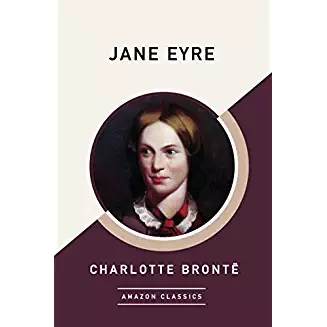
This week I read a wonderful essay titled “Reading Jane Eyre While Black” that I’ve been turning over in my mind ever since. Not only does it compare two of 19th -century England’s most fascinating writers — Charlotte Bronte and Jane Austen — but it hits on many of the issues I’ve been thinking about lately. About authorial intent, and how there will always be something a little mysterious about it, even to the author. Also how as both readers and writers we bring our own biases, both the known and unknown, to the page.
Tyrese L. Coleman makes many interesting points along the way, but one key theme is how “Jane Eyre” has been ruined for her by Bronte’s depiction of Bertha Mason, whose craziness and evil is inextricably linked to her West Indian origins and implicit blackness. Continue reading
Seventy-five percent in, and I feel how I have misjudged it in what I wrote, for at some point since then I tipped over into the point at which fiction resembles magic. I no longer see Tolstoy’s little tricks, how he’s pulling the reader’s strings, but am simply being pulled by them. I’m utterly beguiled; I’ve forgotten I’m reading in translation. All I feel is how it’s all becoming deeper and somehow stranger and at the same time solid and real. Continue reading
I’ve been away from this blog for so long I feel almost obliged to fashion some adroit explanation — picnic, lightning — but the truth is, I was doing other things. Reading, writing, rethinking, rewriting. (When does rewriting have an end? I can only say, not yet.)
After “The Golem and the Jinni” I proceeded to read a string of amazing books I wish I had stopped to write about, for now I cannot do justice to them: Continue reading
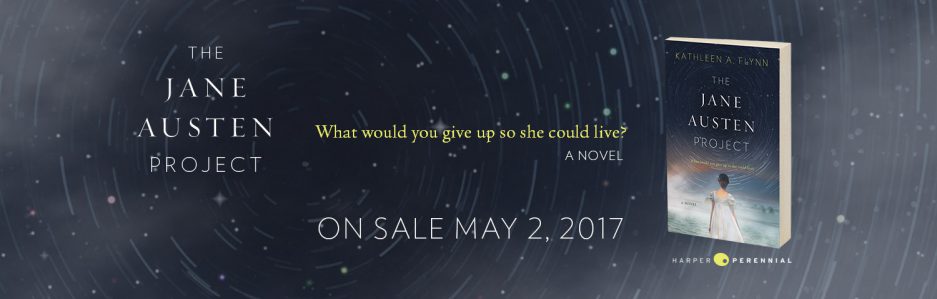
Near the beginning of my current draft of “The Jane Austen Project” there is an allusion to “Ivanhoe.” As a matter of principle I have tried to read the books my characters read, and while I long doubted there was much to be gained from reading “Ivanhoe,” I downloaded the free Kindle version onto my phone anyway, just to have something to read in case I accidentally found myself on the subway between library books. This happened, and I started reading it.
I am perhaps a third of the way through, and it’s astonishing. Continue reading


 The Jane Austen Project: A Novel