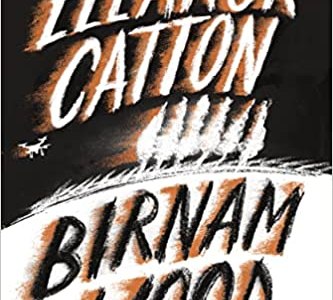
Birnam Wood


I remember being impressed by the range and ambition and intricate structure of The Luminaries, the novel that made Eleanor Catton the youngest-ever winner of the Booker Prize, but not feeling particularly touched by it emotionally. So many characters made it hard to feel invested in any particular one. It was a book I read with more admiration than enthusiasm.

Birnam Wood, on the other hand, grabbed me from the start and wouldn’t let go. It ends as a thriller, but hardly starts out as one; on the contrary, it begins quietly, but immediately draws the reader into the complicated, contradictory emotional lives of the first three people we first meet: Shelley and Mira, two friends in their late 20s who are members of a guerilla gardening collective, and Tony, a former member who had a thing with Mira but has lost touch with her and has been abroad for several years, teaching English in Mexico.

Catton gives us a view inside each of these people by turn, and the difference between how they think about themselves and how the others view them is utterly fascinating. Shelley wants to leave the collective but doesn’t know how to tell Mira; Mira already suspects it’s coming. Mira presents as bold and resolute; inside, she’s something of a mess. Shelley is the opposite, running herself down, resenting her position as Mira’s sidekick yet feeling stuck in it, oblivious to her own strengths. And Tony! Wishing to make a difference in the world, clever in certain respects, utterly clueless in many others. The slight edge of satire is sharp but never overdone.

Mira, always on the hunt for new locations for her furtive gardening projects, goes on a fact-finding mission to a disused sheep farm she’s learned about, a place that was set to be subdivided until a landslide turned it into a cul-de-sac for an indeterminate period, as the one road through is blocked and the property is bounded by national parkland. While looking around, she runs into a mysterious man who does not believe her cover story about being a location scout for a movie, and seems to know an alarming amount about Mira.

The mystery man turns out to be Robert Lemoine, an American billionaire who made his fortune in surveillance drones. Officially, he is (secretly) buying the farm because he wants to build a luxury bunker there. In fact, he has an even more secret agenda. In the gardening collective, he senses opportunity….

That Lemoine is something of a cartoon villain in his blinding intellect, pure, amoral self-interest and prowess with surveillance technology, and yet does not seem any less improbable than some real-life versions of the same thing — Elon Musk, Jeff Bezos and Steve Jobs come to mind — is a sad testament to the world we live in. He introduces a whole new level of crazy to this story, yet it all seems plausible enough. Actions have consequences, leading to other consequences; Catton has set up her dominoes and everything falls as it must.

Birnam Wood is the name of Mira’s stealth gardening organization, yet it also recalls the moveable forest that portended Macbeth’s doom. As the story goes on, this association becomes clearer. The novel does not try to do anything as clumsy as retell Macbeth, yet the way that incident follows incident, accelerating and increasingly high-stakes, careering toward inevitable disaster, is reminiscent of that play.

It’s more than 400 pages, and I read it in two days. Did not want to put it down. Emerging blinking into the world, going, what WAS that? And that, reader, is the mark of a good book.

When Ideas Acquire Solidity, Part II

Almost five years ago now, I wrote about the strange feeling of going to the a local copy shop to print out copies of my novel in preparation for a manuscript workshop. More specifically, about the strange feeling of walking out of the store with them, that something existing only in my mind had now taken a physical form, had become a thing that existed in the world, like a rock or a highway or a batch of cookies cooling on the counter. Continue reading

In the Realm of Implausibility

Why write fiction? Why read it?

People enjoy stories because they are both like and not like real life. Fiction holds up a mirror to real life, but it’s a magic mirror: ideally it is shapely in a way that life generally isn’t, with a clear arc: of rising action, a sense of change, of forward motion. It leaves out the boring and irrelevant bits.

The successful distillation of life situations to their essence requires — what? Increasingly I think the whole goal of fiction is to make the implausible seem, by a series of subtle, almost imperceptible steps, vividly possible.

I’ve been thinking about this in the context of what did and did not work in Pam Mingle’s “Kissing Shakespeare” and Shannon Hale’s “Austenland” and two novels that would seem to have little in common, other than that I’ve recently read them, and that they involve the effort to assume the manners and customs of another time. Continue reading

A Farewell to Something

The news that Scribner is bringing out a new edition of “A Farewell to Arms” with all the 40-something endings that Hemingway tried and rejected was of more than usual interest to me, for reasons that regular readers of this blog will have no trouble guessing.

So other people do that too? Particularly Hem, who has been established in the literary pantheon as the very extreme of a certain type of 20th-century writer: macho, terse, but above all decisive. Hem does not waffle, or so we would like to think. This might be an appropriate time to confess I have never read “A Farewell to Arms,” finding H. rather tedious as novelist, although I think some of his short stories are among the very finest examples of that genre (and I also liked “A Movable Feast”).

But I would would read this edition. Unlike some cynical commenters who saw in this publishing move merely a naked ploy to sell new editions of an old book, I think the process of writing is sometimes more interesting than the result. As I’ve been revising my novel I’ve been taking things out that I no longer think work but might change my mind about later, from single sentences to entire chapters. (I draw the line at single words. I am not that crazy. Yet.) To my astonishment, today I noticed this outtakes file is, itself, 115 pages long.

Somehow the book itself seems to always remain about 390 pages long, however, like one of those magical purses in fairy tales that constantly are full of gold.

The Sense of an Ending

I have been neglecting this blog, but I have definitely not been idle. Several geologic ages seem to have passed since I wrote my review of “Ivanhoe.” I have discovered several surprising new things about characters I thought I knew well. Among them, not to give away any plot spoilers, is that Liam can sing and that Rachel had had a long affair with a (supposedly happily) married man before joining the time travel project. Are these facts important? I think so. Continue reading

The End

I reached it today. I wish I could describe how I feel right now. Like someone who puts the last piece in a 1,000-piece puzzle, except this was a 150,000-word puzzle.
Like — is this it? Really? As Rickie Lee Jones would say, Is This the Real End? A strange mix of exhilaration and anticlimax.
And it’s not like it’s really the end. Revision will be needed. Maybe a lot.
I can’t wait to see what my colleagues at the writers’ workshop, who I already feel closer to, in a strange way, than some people I have known for years, will say.
But then, I kind of can wait, for what if this novel really bites?
I had given myself permission for years not to ask that question. Now it’s done, and I have to. The question virtually asks itself, though fortunately or unfortunately does not answer itself.
I look forward to rejoining the world of normal people, people who go to movies without guilt, though I don’t think I belong there anymore.