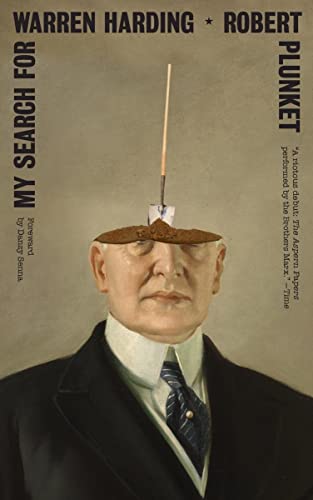
I learned about My Search for Warren Harding from a story in The New York Times. It was originally published in the 1970s and soon fell into obscurity, along with its author, though becoming sometimes of a cult classic for its edgy humor. By chance a few years ago it fell into the hands of people influential enough to get it published again and given a second chance at fame. Even better: Robert Plunket, in his 80s, is still alive and gets to enjoy his book’s revival.
His new introduction had me laughing out loud, so I had high hopes for the actual book. Alas, these were only partly realized, though there are definitely funny moments.
The other introduction, by the writer who helped get republished, essentially warns the reader: Political incorrectness ahead! There is a great deal of homophobia and fat-shaming here, which would get Mr. Plunket canceled had he dared to write it today, and perhaps was funnier a few decades ago. But one should read a book as a reflection of its time, not impose today’s strictures on it.
But to get to the story. It is narrated in the first person by an obscure historian who has come to California from New York City in hopes of obtaining a cache of documents connected to President Warren Harding, who notoriously fathered a child with his mistress. The narrator has discovered through a series of unlikely events that this love child is in fact still alive, though obviously quite old, and living in Southern California. She is still in possession of these papers. Certain they will change the field of Warren Harding studies forever, as well as make his career, he engages in an escalating set of bad choices in an effort to get his hands on them.
So the plot itself is kind of a nonsense quest; it reminded me of Headlong by Michael Frayn. Just as that book taught the reader about Bruegel’s paintings between the madcap capers, this one painlessly teaches the reader more about Warren Harding. (And who among us does not need to learn more about Warren Harding?) In sheer wackiness, it reminded me of Made for Love by Alissa Nutting.
The story kind of sputters along, or so it seemed to me — though delightfully. Reading it was like having the sort of friend who tries to tell you a story of something that happened to them but keeps getting sidetracked by humorous asides. Until finally you give up and realize that the humorous asides are in fact the point.
The real interest here is in the narrator. He has the stereotypical reactions of a New Yorker to Southern California, and he is — as becomes increasingly clear as the story goes on — a deeply closeted gay man. There is humor in this but honestly for me also pathos, which I don’t think the writer was necessarily intending (although who can know for sure).
In one of the introductions, or maybe The New York Times story, I learned that this is a rewrite of The Aspern Papers, a book I have long meant to read by another famously deeply closeted gay man. Maybe this will finally get me to do it.


 The Jane Austen Project: A Novel