Sharing this wonderful post from Henry Oliver.
https://www.commonreader.co.uk/p/why-we-love-jane-austen-more-than
“Why is Jane Austen quite so popular?
The reason is simple….”
Sharing this wonderful post from Henry Oliver.
https://www.commonreader.co.uk/p/why-we-love-jane-austen-more-than
“Why is Jane Austen quite so popular?
The reason is simple….”
Twenty-four days into 2024, I’m renewing my resolution to post a brief review here of everything I read, instead of just posting on Goodreads.
Because, first, why should I work for Goodreads for free, when I can instead work for myself for free here on WordPress?
Second, my reviews seem to be vanishing off Goodreads. I definitely wrote down some thoughts about Grant Allen’s “What’s Bred in the Bone,” the most insane book I read in 2023, and now my review is gone! Vanished down the memory hole as if it never existed. I don’t think I had deep thoughts about it, but now I might as well now have had none. (Was it possibly the label “batshit crazy” that earned its erasure? I will never know. Goodreads does not explain. Goodreads does not apologize.)
But here, without further ado, Small Things Like These:
Wow. Holy mother of god. This book.
On my third book by her, I should be used to Claire Keegan by now and the things she can do with fiction, but “Small Things Like These” has knocked me sideways. It’s a very short novel and I listened to it on a weekend day. When it ended, I could not stop thinking about it.
Once I understood the basic problem that the story was setting forth, I could not imagine it how would end. But once I got to the end, I understood perfectly what would happen next. Like that of “Foster,” the ending “Small Things Like These” has a way of propelling the narrative, as if you as the reader are continuing the story in your head, participating in the work of the writer.
The problem the story sets forth is this: A man — Bill Furlong, a basically normal, decent man, with a personal history that has conditioned him to be sympathetic to outsiders and those down on their luck even though he himself, through hard work and self-discipline, has constructed a comfortable life — sees something he should not have seen, a vision of cruelty that causes him extreme discomfort.
Everything practical and sensible, every spoken and unspoken social pressure, is telling him to sweep it under the rug and pretend he never saw this thing. To ignore it would be the easiest thing in the world; no shame would attach, except that he attached by himself. And yet. And yet.
A universal story, you might say, and it is, but Keegan cleverly constructs it out of specific particulars, a carefully chosen time and place. It’s mid-1980s Ireland, a small town. It’s Christmastime, and it’s cold. We all know about the Magdalene laundries by now, but this is a few years before all the horrifying details would come out; the last years when small-town Ireland was effectively ruled by an informal yet powerful theocracy of the priests and nuns of the Catholic Church. Keegan makes it clear how people in the town sort of knew but sort of didn’t want to know what might or might not be going on in the convent, and how the women who worked there came to be there.
Furlong, whose business is supplying heating fuel like coal, wood and turf, goes to the convent to make a coal delivery, early on a Sunday morning because he’s so overbooked, not a time he would normally be expected. When he opens the coalshed door, he makes an unexpected discovery: a girl has been left there.
What’s so interesting and powerful about this book is the way it is rooted in particulars, yet it also has an almost mythic dimension. The way Furlong’s own childhood is something of a fairytale; minor characters who assume, ever so lightly, allegorical shapes. The use of snow, and cold, and Christmas. There is not one detail out of place, and even the evil nuns are sketched with a certain sympathy. For the Christians among us, it is one of those books that raises uncomfortable questions about what being a Christian actually means.
This week I read a wonderful essay titled “Reading Jane Eyre While Black” that I’ve been turning over in my mind ever since. Not only does it compare two of 19th -century England’s most fascinating writers — Charlotte Bronte and Jane Austen — but it hits on many of the issues I’ve been thinking about lately. About authorial intent, and how there will always be something a little mysterious about it, even to the author. Also how as both readers and writers we bring our own biases, both the known and unknown, to the page.
Tyrese L. Coleman makes many interesting points along the way, but one key theme is how “Jane Eyre” has been ruined for her by Bronte’s depiction of Bertha Mason, whose craziness and evil is inextricably linked to her West Indian origins and implicit blackness. Continue reading
 Almost five years ago now, I wrote about the strange feeling of going to the a local copy shop to print out copies of my novel in preparation for a manuscript workshop. More specifically, about the strange feeling of walking out of the store with them, that something existing only in my mind had now taken a physical form, had become a thing that existed in the world, like a rock or a highway or a batch of cookies cooling on the counter. Continue reading

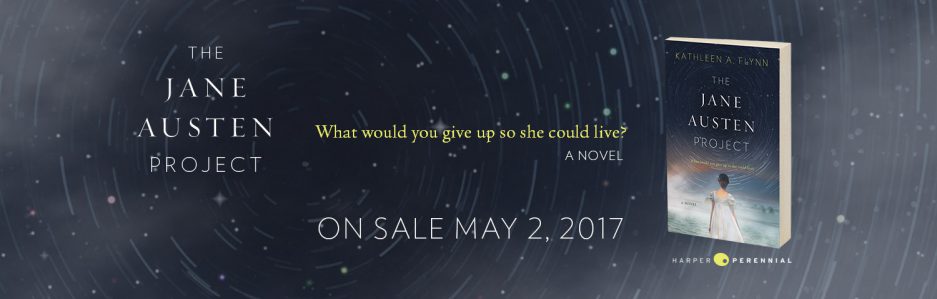
When the idea first seized me of writing a book about time travel and Jane Austen, I realized that despite being a fan of her work, I knew little about her life or her England. There was no way around it: I had to do some research. I joined the Jane Austen Society of North America, impressed that there actually was such a group, and started attending meetings of my local chapter. I got an alumni library card and read my way through the Jane Austen shelves at Barnard. My need for more obscure and specialized knowledge about things like the history of housekeeping and slavery-era Jamaica led me to the New York Public Library reading room and online collection. To great websites like Two Nerdy History Girls, Jane Austen’s World, Jane Austen’s London, and many others. In search of atmosphere, I went to London, Bath, Winchester and Chawton. Also, oddly, Dublin, better than London for trying to imagine 1815 London, with its streets and streets of Georgian terraced houses and the excellent Number 29 house museum. I set up Google alerts so as not to miss any Jane Austen news.
When I look back on all this, I think of a line from John Irving’s weird masterpiece The Hotel New Hampshire: “You’ve got to get obsessed and stay obsessed.” And when I look back on all this, there seems a kind of innocence, an undergraduate assurance that if one could only learn enough about a subject, the rest would fall into place.
Still. Did I over-prepare? Probably. Did I need to read that many biographies? Probably not. There are all kinds of ways of not writing, and research is a great one, because it’s so respectable. There is no possible world in which this amount of time spent on one entertaining but slight novel could make any sense, economically or artistically. Not unless love or its mysterious twin, obsession, enters the picture.
For in the end, it boils down to time. Given varying lifespans — but we don’t know that part ahead of time — we are all equal in our allotment of 24 hours to a day, seven days to a week, 365 days to a year. We are crying babies, curious toddlers, restless teenagers and so on, until we look in the mirror one day, surprised to find ourselves trapped in the body of an old person.
You cannot conquer time. Unless, maybe, to lose yourself in something to such an extent that time ceases to have its usual dominion. It’s passing as always, but you don’t notice. The world just goes on without you, people dying and being born and seeking public office. And that, I see now, was the real gift of my multiyear obsession with Jane Austen. Not the novel I ended up with, but the experience of writing it. Not in the finding, but in the seeking.

I have an agent. I wrote a novel that sold to a Big 5 publisher. I belong to two writing critique groups, and I live in Brooklyn. Yet when one of my newer writing critique group members asked me if I’d been to any residencies — not in a judging way, but in a friendly, encouraging tone — I froze, as if this were a trick question; a veiled insult; a failure of tact. But only people like you go to those, I thought but could not say. Real writers. Not only have I not gone to one; it would never occur to me to apply! Not that I wouldn’t want to — just like I’d like to go horse trekking in Mongolia. Equally dreamy, equally improbable.
But later I started to think over this exchange, and to wonder. What would it take for me, like the Velveteen Rabbit, to become real? What does it take for anyone? Continue reading


 The Jane Austen Project: A Novel