Rereading Middlemarch in 2025

What I’m struck by this time around is something that’s easy to miss 150 years later: George Eliot was writing historical fiction. Published (in installments) in 1871 and 1872, the chief action of the book takes place over the end of the 1820s and start of the 1830s. It would today be like writing a novel about the mid-Reagan years, by someone born in the 1970s — old enough to remember those times. (Eliot was born in 1819 and died in 1880.)

I too am old enough to remember the 1980s. It is a real time for me, not something from history books, and I see the images of those days in color — not the sepia tones of the 19th century or the black-and-white of the early 20th century. Yet it was also a long time ago, and a lot has happened since. A person setting out now to write a novel of the 1980s would have to carefully think about the telling details. Corded landlines (though in those days known simply as “phones”). Cassette tapes. Guess jeans. Madonna. Morrissey. Those masses of rubber jelly bracelets people wore — why? “Falcon Crest” on the TV. Gorbachev. Last days of the Iron Curtain, though no one knew it yet. Such a novelist would need to think about how much the world had changed in the intervening 40 years, and how people in the 1980s had little idea what was coming, yet were obliged to go through their lives, making their moral and career and marriage choices with the best information available at the time.

It’s this kind of doubleness that 50-something Eliot would have had in her head sitting down to write Middlemarch, and that she could expect her readers to be aware of.

From the vantage point of 2025, both 1871 and 1830 seem equally long ago. For modern readers, she might as well have written this in 1835. But they are wrong. The 1830s had at least as much tumult and change as the 1980s, and perhaps more. It took the perspective of decades to take in what it all meant.

And once you see, you can’t unsee it. How Eliot makes a point of noting the absurdity of women’s bonnets, or observing that someone is wearing a pelisse, or talking about the Reform Bill or labor unrest, or surveying land for where the railroad will come through. Old-fashioned ideas about medical science. To me it seems all flavored with nostalgia for a lost world, the world of her own childhood, and with the awareness of how much change the years would bring.

It’s an even wider canvas, then, than we normally think of Middlemarch as being. Not just a whole town, and the country gentry who live outside the town. Not just a series of happy and unhappy marriages and struggles with money and careers, but the action of time itself.

Birnam Wood


I remember being impressed by the range and ambition and intricate structure of The Luminaries, the novel that made Eleanor Catton the youngest-ever winner of the Booker Prize, but not feeling particularly touched by it emotionally. So many characters made it hard to feel invested in any particular one. It was a book I read with more admiration than enthusiasm.

Birnam Wood, on the other hand, grabbed me from the start and wouldn’t let go. It ends as a thriller, but hardly starts out as one; on the contrary, it begins quietly, but immediately draws the reader into the complicated, contradictory emotional lives of the first three people we first meet: Shelley and Mira, two friends in their late 20s who are members of a guerilla gardening collective, and Tony, a former member who had a thing with Mira but has lost touch with her and has been abroad for several years, teaching English in Mexico.

Catton gives us a view inside each of these people by turn, and the difference between how they think about themselves and how the others view them is utterly fascinating. Shelley wants to leave the collective but doesn’t know how to tell Mira; Mira already suspects it’s coming. Mira presents as bold and resolute; inside, she’s something of a mess. Shelley is the opposite, running herself down, resenting her position as Mira’s sidekick yet feeling stuck in it, oblivious to her own strengths. And Tony! Wishing to make a difference in the world, clever in certain respects, utterly clueless in many others. The slight edge of satire is sharp but never overdone.

Mira, always on the hunt for new locations for her furtive gardening projects, goes on a fact-finding mission to a disused sheep farm she’s learned about, a place that was set to be subdivided until a landslide turned it into a cul-de-sac for an indeterminate period, as the one road through is blocked and the property is bounded by national parkland. While looking around, she runs into a mysterious man who does not believe her cover story about being a location scout for a movie, and seems to know an alarming amount about Mira.

The mystery man turns out to be Robert Lemoine, an American billionaire who made his fortune in surveillance drones. Officially, he is (secretly) buying the farm because he wants to build a luxury bunker there. In fact, he has an even more secret agenda. In the gardening collective, he senses opportunity….

That Lemoine is something of a cartoon villain in his blinding intellect, pure, amoral self-interest and prowess with surveillance technology, and yet does not seem any less improbable than some real-life versions of the same thing — Elon Musk, Jeff Bezos and Steve Jobs come to mind — is a sad testament to the world we live in. He introduces a whole new level of crazy to this story, yet it all seems plausible enough. Actions have consequences, leading to other consequences; Catton has set up her dominoes and everything falls as it must.

Birnam Wood is the name of Mira’s stealth gardening organization, yet it also recalls the moveable forest that portended Macbeth’s doom. As the story goes on, this association becomes clearer. The novel does not try to do anything as clumsy as retell Macbeth, yet the way that incident follows incident, accelerating and increasingly high-stakes, careering toward inevitable disaster, is reminiscent of that play.

It’s more than 400 pages, and I read it in two days. Did not want to put it down. Emerging blinking into the world, going, what WAS that? And that, reader, is the mark of a good book.

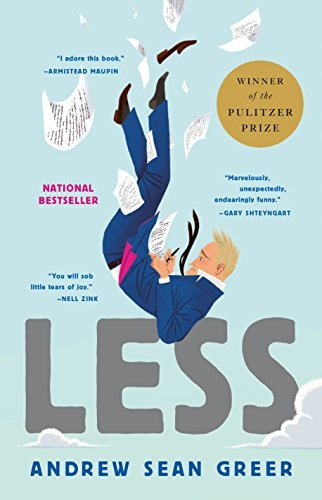
‘Less’ Is More Than the Sum of Its Parts

I “read” LESS as an audiobook, which may have affected how it worked on me. Though a short book, it took weeks to get through, chiefly because of all the limits when I allow myself to listen to an audiobook. (Mostly I listen in the gym — but then I got Covid and stopped going to the gym. On walks — but only when alone, because otherwise it’s antisocial. Not in bed at night, because I fall asleep and miss things. Not on my commute, because I am unreasonably afraid of an earbud falling out of my ear and into some irretrievable place. Etc.) So I kept putting it aside for days at a time and then returning to it, yet somehow never lost the thread. This might be in part because of its episodic nature, as I discuss more below.

LESS is laugh-out-loud-with-an-undignified-snort funny in places. (I had to suppress this impulse in the gym.) It is also lyrical. Andrew Sean Greer has a master touch with unexpected metaphors and similes, with descriptions that pierce your heart with their rightness. He writes well about love and longing and nostalgia. But anyone who writes about such topics, however well, risks descending into self-indulgent bathos, into sweet sentimentality. The humor is the lemon juice or the lemon zest that is supposed to keep this from happening. Did this work? Mostly, it did.

The structure is fairly simple, as the chapter headings make clear (Less at First, Less Mexican, etc). Arthur Less, in order to escape the wedding of the man he has (too late) realized he truly loved to another man, is traveling around the world courtesy of a series of decreasingly probable writerly events. (He’s a novelist, whose latest novel has been rejected by his publisher.) Everywhere he goes, disaster threatens but never quite strikes. It is not so much the rising action of a conventional novel as a picaresque — a series of episodes, rather than one thing leading to another. Although it is true that certain motifs recur, which does offer a sense of things being completed. The journey is mostly into himself, into the reality of getting older as a once-beautiful young man, facing age and time and the specter of death.

This book got a lot of prizes and acclaim and presumably sales. I always cheer when a book that dares to be funny instead of tragic manages that.

The Blog’s Gone Dark

I have not posted here since an outing in February to a wonderful dramatization of the Bronte sisters’ life. I am not keeping up with my reading list  (although I do  so on Goodreads). I started another #100daysofwriting challenge and quickly began forgetting — not to write, I never forget that — but to take a daily picture and post it on Instagram.

Feckless though I am, it struck me it might be fun in retrospect to have had some record here of the progress of the novel I imagine myself to be writing. Though it may come to nothing (the novel-diary plan, I mean — the novel will come to something, though hard to say what), mere risk of failure is not enough of an argument against. So here goes, in hopes that it can encourage others as much as myself.

I got a half-baked notion to write about the Brontes back in 2013, though I did not form any resolve until 2017,  also an alarmingly long time ago. Continue reading

In the Realm of Implausibility

Why write fiction? Why read it?

People enjoy stories because they are both like and not like real life. Fiction holds up a mirror to real life, but it’s a magic mirror: ideally it is shapely in a way that life generally isn’t, with a clear arc: of rising action, a sense of change, of forward motion. It leaves out the boring and irrelevant bits.

The successful distillation of life situations to their essence requires — what? Increasingly I think the whole goal of fiction is to make the implausible seem, by a series of subtle, almost imperceptible steps, vividly possible.

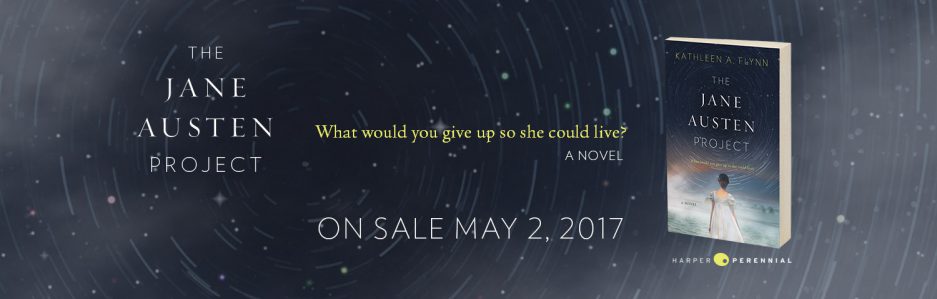
I’ve been thinking about this in the context of what did and did not work in Pam Mingle’s “Kissing Shakespeare” and Shannon Hale’s “Austenland” and two novels that would seem to have little in common, other than that I’ve recently read them, and that they involve the effort to assume the manners and customs of another time. Continue reading